Video analysis
Something Is SERIOUSLY Wrong With the Euro!
Institutional traders are aggressively shorting the euro across all pairs.
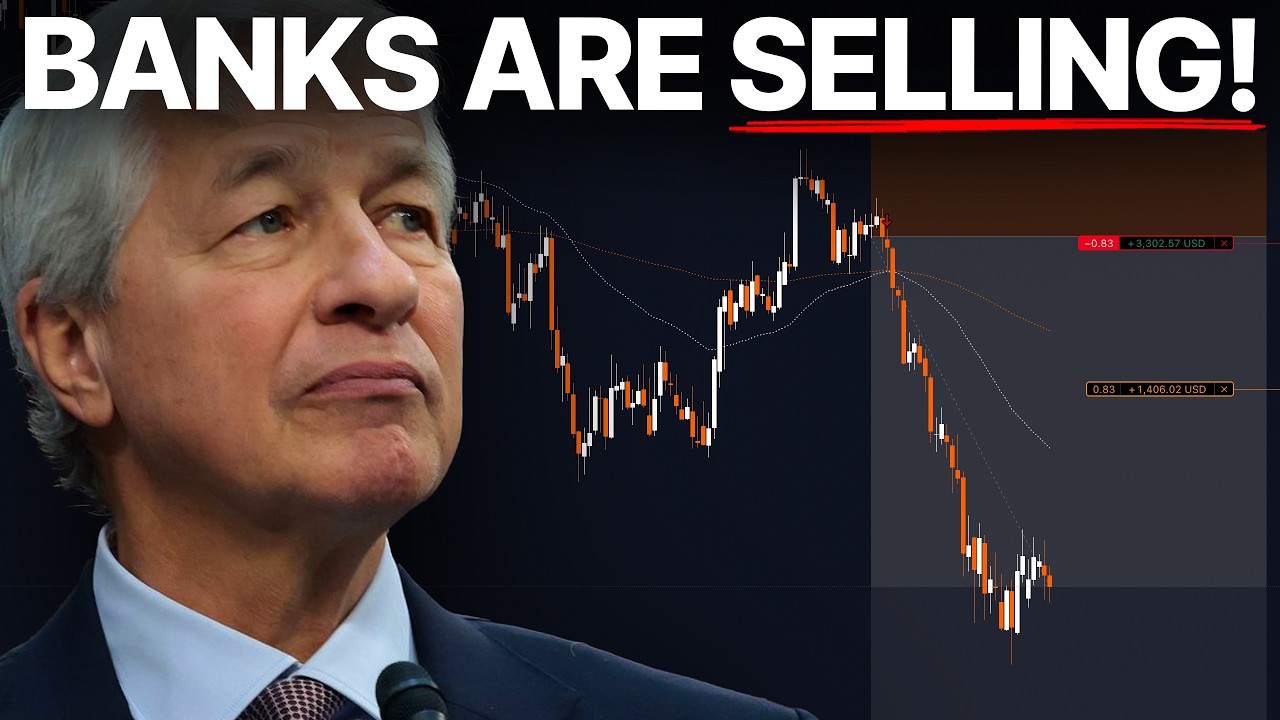
James LNE examines the structural weakness in the euro, driven primarily by French fiscal and political risks rather than fundamental economic deterioration. He presents multi-timeframe evidence from COT positioning, bank consensus, and technical analysis to support a bearish euro bias, with specific trade setups in EUR/USD, EUR/GBP, and EUR/NZD.
The Euro's Real Problem: France, Not Fundamentals
The euro is under sustained institutional pressure, but the culprit is not what most traders assume. While the broader dollar strength narrative dominated early 2024, the euro's recent deterioration stems from a distinctly European problem: French fiscal and political instability. This distinction matters enormously for positioning and trade strategy.
Across all major euro pairs—EUR/USD, EUR/GBP, EUR/CHF, EUR/CAD, and EUR/AUD—the currency is trading lower. The edge finder sentiment score for EUR/GBP has reached -11, reflecting extreme bearish conviction. Yet when analysts examine eurozone economic data in isolation, the picture is far less dire. GDP growth remains positive, unemployment sits within normal ranges, and services PMI holds above 52. The disconnect reveals a market pricing in tail risk, not economic weakness.
Institutional Positioning Confirms the Bias
Commitment of Traders (COT) data provides the smoking gun. As of mid-October, net positioning stands at 68,000 contracts short—a level not seen since October 2024. More critically, the week-on-week flow shows 23,000 contracts liquidated to the short side, representing aggressive institutional selling. This is not retail panic; this is smart money conviction.
The three preceding weeks have shown consistent outflows of 5,000, 12,500, and 23,000 contracts respectively. This persistence suggests the selling is structural, not tactical. Bank research consensus reinforces the message: high-conviction bearish calls from ING, Deutsche Bank, Danske Bank, and Standard Chartered all cite French political and fiscal risk as the primary rationale—not eurozone growth concerns.
The French Fiscal Crisis: The Real Story
The French 10-year OAT yield has broken above 5% for the first time since 2002, while the OAT-Bund spread has widened to 174 basis points. This spread reflects market anxiety about French sovereign risk relative to German debt. Political uncertainty surrounding France's fiscal trajectory has created a risk premium that no amount of ECB accommodation can offset.
The ECB itself remains near its terminal rate of 3.26%, with markets pricing only a 69% probability of a December hike and no hikes expected in October. This severely constrains the central bank's ability to support the euro through further tightening. The policy lever is nearly exhausted, leaving the currency vulnerable to external shocks.
For traders, the implication is clear: shorting the euro remains a high-conviction trade, particularly against the pound. The technical setup in EUR/GBP has already delivered a substantial move lower, but the fundamental backdrop suggests further downside remains. Waiting for pullbacks into Fibonacci resistance zones offers disciplined entry points for those seeking exposure to this structural weakness.
Every number in this video came off the board.
Composite scores on 24 markets and the Analyst videos panel on the free plan, with positioning across 44 and the research behind them on Pro. 15 panels on 2 boards free, no card, and every new account opens with 14 days of Pro.