Video analysis
The Market Is Getting This VERY Wrong…
Central banks are pricing hikes markets don't believe will happen.
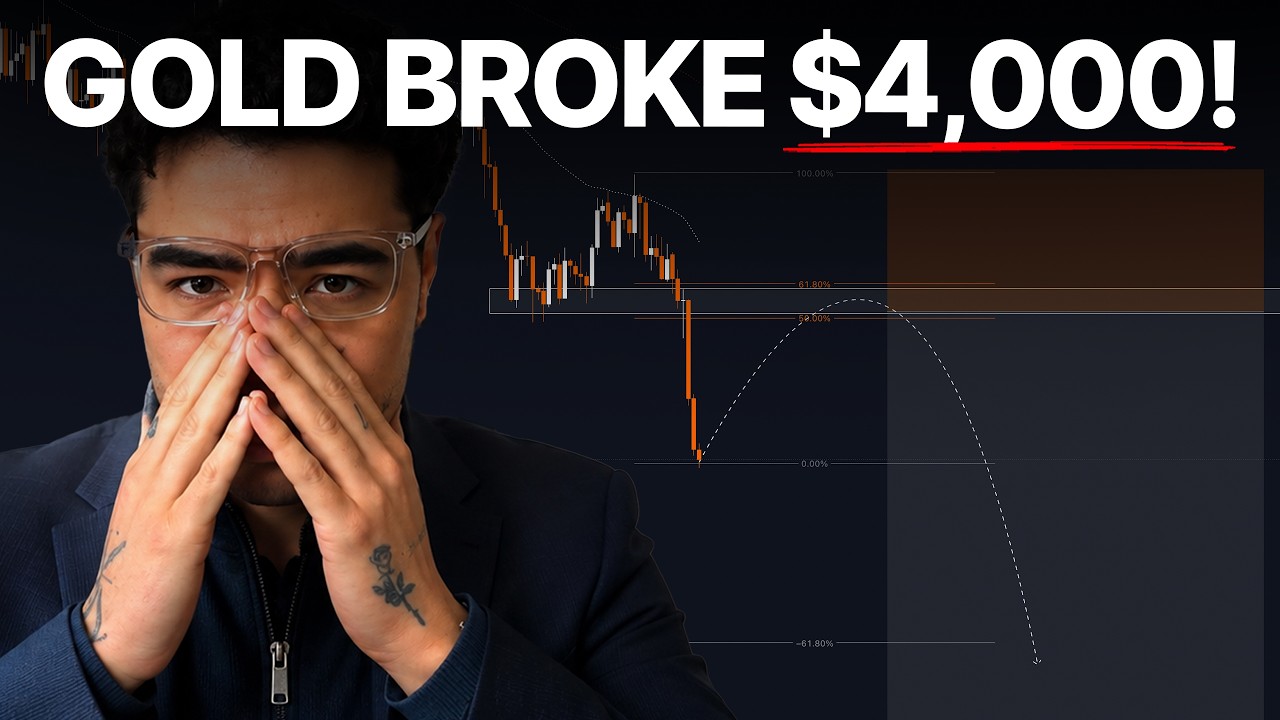
James LNE analyzes major central bank decisions from the prior week, highlighting a significant disconnect between market pricing and fundamental reality. He examines implied rate expectations across the Fed, ECB, BOE, BOJ, and RBNZ, then maps out key technical trades across forex, commodities, and indices for the week ahead, with particular focus on sterling fragility and geopolitical oil support.
The Central Bank Repricing Disconnect
Last week delivered a flurry of major central bank decisions—the Federal Reserve, ECB, Bank of England, Bank of Japan, and RBNZ all met within 48 hours. Yet despite this packed calendar, markets have begun a dramatic repricing of rate expectations that reveals a critical disconnect between what central banks have signaled and what markets had priced in.
The most striking shift appears in Federal Reserve expectations. Just weeks ago, markets were pricing a 90–100% probability of rate hikes through 2027. Today, the December meeting shows only 70% probability, with the implied rate dropping sharply below levels from just seven days prior. This represents a substantial repricing of US dollar strength assumptions. The ECB faces similar dynamics, with only a 71% hike probability at the December 17 meeting and holds expected throughout 2027–2028. Meanwhile, the Bank of England has priced in nearly 100 basis points of hikes from its current 3.75% level, creating what analysts describe as an overstretched rubber band—fragile and vulnerable to any negative data surprise.
The RBNZ's surprise hold last week, contrary to market expectations, has already triggered repricing in New Zealand dollar positioning. The BOJ, meanwhile, is seeing modest hike expectations (59% and 52% probabilities) despite emerging from negative rates only recently. This environment creates both risk and opportunity for currency traders, particularly in pairs where interest rate differentials are less punitive on the short side.
Geopolitical Oil and the Inflation Wildcard
Beneath the central bank narrative sits a more troubling structural issue: Middle East tensions remain decidedly un-de-escalatory. Iran's security chief has vowed to keep the Strait of Hormuz closed until Tehran's conditions are met, while Iranian Navy incidents and reported tanker fires continue. Trump's signaled potential strikes on Iranian sites add further uncertainty. This geopolitical backdrop has consistently pushed oil prices higher, with attempted de-escalation headlines (peace deals, strait reopening offers) fading quickly and being replaced by re-escalation.
The dynamic creates an odd tension: central banks are pricing rate cuts or holds based on cooling inflation expectations, yet oil—a primary inflation driver—remains structurally bid. Oil is expected to drift higher with periodic pullbacks on intervention headlines, but the overall trajectory remains upward. This mismatch between central bank dovishness and commodity inflation could force policy recalibrations if energy prices persist at elevated levels.
Key Trade Setups for the Week
The Bank of England rate decision on Thursday emerges as the week's critical event. With sterling priced for aggressive hikes and performing as the best G10 currency, any signal of BOE reluctance could trigger sharp repricing. The pound has stretched on consecutive positive data prints and rate hike pricing—a classic setup for mean reversion if the central bank disappoints.
Yen pairs offer attractive shorts on BOJ hike expectations and carry trade unwind dynamics. EUR/JPY and CHF/JPY are preferred over USD/JPY due to lower swap costs. EUR/USD shorts remain attractive not on dollar strength but on structural euro weakness, particularly given France's fiscal and financial stress. EUR/NZD pullbacks present opportunities to re-establish shorts despite the RBNZ surprise hold, as European weakness should persist.
Gold and silver have broken below key levels (gold below 4,000) and are setting up for continuation lower. Traders should wait for pullbacks into Fibonacci retracement zones before establishing shorts, targeting 3,500–3,400 on gold with no technical support in between.
The NASDAQ presents a compelling bearish setup on lower highs and lows, broken support levels, and AI valuation concerns. However, the 200-day moving average offers dynamic support, suggesting traders should wait for a pullback toward the 50% Fibonacci retracement before shorting. The risk-reward becomes attractive on a confirmed rejection from that level.
GBP/NZD remains bullish on the RBNZ hold surprise, with the 38.2 Fibonacci aligning with prior structure, though this trade's success hinges on Bank of England messaging Thursday.
The data in this video, live
The figures in the video were read off the terminal on 1 November 2026. These pages show the same data as it stands today, free.
- EuroEuro outlookEuro COT positioning
- Japanese yenYen outlookYen COT positioning
- US dollarUS dollar outlookUS dollar COT positioning
- British poundPound outlookPound COT positioning
- The Bank of EnglandBoE rate expectations
- EUR/GBPEUR/GBP analysis
- The scoresEvery market's score
Transcript
4,928 words, with timestamps
0:00Hello, hello, I hope you're ready for a new week. So in this video, we'll go over what trades I'm in, what trades I'm looking at. However, first, before we do that and we get into the charts, we will have a look at some of the fundamentals that we do need to know going into this week. So last week, we had a couple of different things going on. We had the UK budget, we had the Federal Reserve, we had the ECB, we had the RBNZ, we had the Bank of Canada. Now that was a very busy period.
0:22It all happened within about 48 hours, but nothing actually happened. So we had the Federal Reserve that held their interest rates. So again, not a huge amount of interest here. We have seen the implied rate starting to drop quite dramatically. So we can see the green line here is the current implied rate. The grey line just above it is the implied rate seven days ago. So when that is dropping, so when the green line is below that grey line, it means the markets are starting to loosen or reduce their expectations of hikes going forwards. So we can see in the meetings upcoming, so the next Fed decision, which is on the 9th of December, the markets are only pricing a 70% probability of a hike. Now keep in mind, a couple of weeks ago, this was almost around 100%.
1:05We had basically all of the future decisions through 2027 hovering around 90 to 100% as well. So we have seen a large repricing around the US dollar recently. And again, that was based on the Fed that we had last week. We then also had the ECB here that did held rates at 2.5%, discussed hiking, but held off due to tighter financial conditions. Now, there is a real problem within France. We've been discussing this quite a lot recently, which is, sorry, there's problems within Europe that we've been discussing a lot recently that actually revolve around France.
1:40So we can see here similar things. We had, or we currently have, very little expectations for hikes for the ECB here. So the only one that we can actually see is in the next meeting, which is the 17th of December, which is a 71% probability of a hike. The rest throughout 2027 into 2028 are actually all holds at the moment. Now, of course, this does change as data comes in, as we hear more from central banks. So it's not a case of this is absolutely set in stone, but these are what we are, you know, this is the data right now, and this is what we trade right now, unless we get more data that gives us more context and does begin to change things.
2:13Now, the Bank of England held rates at 3.75%. We can see their implied rate also coming down slightly, but the hikes are still expected going forwards. We can see November, December, February, March, and April, 2027, we are majority on the hiking side at the moment. The BOJ, we are also expecting hikes by them in the next two meetings. Now, it is only a small lean towards hikes. It's, you know, 59% then 52%. So it's by no means an absolute blowout that we are guaranteed hikes, but the markets are expecting this at the moment.
2:47The RBNZ, as I said, did do a surprise hold. So the expectation was that the RBNZ would hike, which is why it was a surprise hold. So the fact they held rates and the market wasn't very happy with that has shown us that market participants have essentially said, okay, we didn't get the hike in this meeting, we must have it in the next one. I wanna say must, it's more like we surely are going to have it then. It's not a case of we are absolutely going to have it then, but again, we can see the implied rate coming down here by the RBNZ. So a lot of the hawkish tones that we've been seeing across the developed market central banks has been sort of taken away very, very slightly.
3:23But what's interesting is the situation in the Middle East has kind of kicked all this off at the beginning of the year, hasn't really shown any signs of cooling down. So the latest sort of summary here on the WatchTower says, Iran security chief vowed November the 1st, Hormuz stays shut till Tehran's conditions are met. Iranian Navy reported tanker fire from mine incident in Strait. First limped attack since 2019, Trump destroyed third carrier on the October the 31st and signalled potential strikes on one or two sites. Iran declared UK military slash intelligence terrorist organisations. So do you see what I'm saying? This isn't even close to de-escalationary.
4:05So when it comes to oil prices, which again has been really kicking off due to the situation in Iran, when we have oil prices going up, we expect energy prices to go up, hence then we get inflation going up. So we've no signs of that changing, but we are seeing central banks a little bit more cautious, can be a little bit of an odd dynamic to try and trade, but that is the situation right now. So that's what we're gonna go with.
4:28So as I've been saying a lot recently, my idea really when it comes to oil is pretty much just upside. Now, something we do need to keep in mind is that we can have these headlines that do come out that might be sort of more de-escalation-like. And this is what we've seen previously, where we come up to what you might consider an uncomfortable oil price. We get these, I'm gonna call them interventions, but they're headlines. Then it unwinds, something happens, it doesn't go through, or we just get a re-escalation. It doesn't really matter, but it just gets faded completely.
4:59We then had the peace deal during this period. That didn't lead to anything. So we've just seen oil prices continue to climb. We saw some sort of de-escalation here. I think this was when Iran offered to reopen the strait if the U.S. agreed to their terms. That also didn't follow through. So this is what I mean when I say oil will continue higher, or I think it will continue higher. It's not a case of it's just a parabolic continuation higher. It might just be this drift where we do have these larger pullbacks on these sort of interventions and headlines, but overall, I'm fully expecting oil to remain a bid.
5:27Now, going into this week, we do have something relatively important. We have the U.S. midterm elections on the 3rd of November. Now, I doubt this will be market moving. We are currently expecting sort of a blue wave. So we're expecting the Democrats to sort of take over at that point. That doesn't mean this isn't a U.S. election. This isn't a case of Trump out and we get a new president. This is a midterm. I'm not gonna explain what midterms are right now.
5:51Feel free to go and Google it, but this could be a little bit of a problem for Trump, and we might see some sort of friction within the U.S. here, a little bit of uncertainty, but overall, it's not something I would expect to be trade-worthy at the moment. That can change, but as of right now, it's not something that is sort of a concern in terms of my positions or what I'm planning to do. We do have the RBA rate decision coming on Tuesday as well.
6:16But however, it doesn't seem like a really busy week, like what we had last week. We do have some important things. So we've got inflation data coming out for the Euro, or sorry, for Europe. We've got ISM services PMI coming out for the U.S. on Wednesday as well. On Thursday, we have the Bank of England rate decision. Now, this will be absolutely key. This is a really, really big one. And the reason that's gonna be so important is because the markets have been pricing Bank of England hikes pretty aggressively, really. So we can see here, 76%, then December is 58, then February 63, March is at 68, April at 56.
6:51So by looking at this implied rate, which is at 4.78%, this is almost 100 basis points above where the interest rate currently is at 3.75%. So this is a lot for the Bank of England to try and meet. So if the BOE comes out in that meeting this week and actually doesn't reaffirm hikes and doesn't take a super hawkish tone, we could see large repricing and a large turn to the downside on the sterling. Now, I do actually think that is very possible because what we've previously heard from the Bank of England is they didn't want to hike rates.
7:27The only way they did, or the only way they justified it previously was because energy-driven inflation did force them to. So it's not a case of the Bank of England is on this massive hiking cycle and they want to do it. It's a case of they have been forced to. So if there's any signs that they actually don't have to hike rates, they will probably take that route. So if we look on the breakdown here, we can see first hike next week expected, budget reassures. Now, again, we did have the budget.
7:53I did discuss the budget, but to sort of round it off, there was nothing important in that budget. There was really, really nothing that I wanted to cover. It just was pretty null and void. The Bank of England sits at 3.75% after holding on the 17th of September. Mark its price a 76% probability of a 25 basis point hike in next week's rate decision meeting. Danske, SEB, and KBC all expect the hike supported by investor confidence in PM Burnham's fiscal agenda following the autumn sentiment, or sorry, statement.
8:26Sterling has been the best performing G10 currency with Euro pound breaking below 0.68. So you can see there's a lot of positive sentiment here, but again, if the Bank of England doesn't back this up, we might see a little bit of a bad time there in the markets for the pound. So something interesting, nothing at the moment that I'm overly sort of concerned about but we will get onto that in a moment when we move on to the charts. So in terms of COT data, we did see a little bit of a bearish change here for the US dollar.
8:52We can see a very, very small change here, really nothing to report. So US dollar COT, really uninteresting here. The Euro saw even more outflows, so we can see 2,734 contracts out. We are seeing continued downside pressure there from the institutions. The pound did also see an outflow, hence, oh, not hence, but again, sort of feeding into my idea that the hikes are a little bit over-expected here by the Bank of England. The yen has saw more inflows here, which again is very interesting.
9:22We'll move on to the yen shortly. Swiss, nothing overly interesting there. The Australian dollar saw a little bit of outflows, however, still very positive positioning. The Canadian dollar continuing to see sort of a bleed out here. We can see on the net contracts here, just really, really negative since 2024. The New Zealand dollar also saw an increase in downside, oh, well, sorry, a decrease in their change. So again, relating to that surprise hold that we had, it's perfectly expected. So that's kind of the rundown there. In terms of actual trades going through this week, so we can see on the WatchTower, there actually isn't a huge list of trades.
10:02Normally, it's a little bit more busy than this. We can see the FTSE, the Dow, PoundCard, and the Nikkei actually are all bullish. Obviously, there are some others. I don't trade the MXN, so I'm not mentioning those ones. And then on the bearish side, we do have, we can see that silver, Euro pound, gold, NASDAQ, Euro yen, all getting bearish readings. So the NASDAQ is a very interesting one, which again, we will move on to shortly.
10:25So on the Edgefinder, what we can see, PoundSwiss is very bullish. We can see the sterling is very bullish. And this is quite interesting because again, it's not just a case of the rates of being aggressively priced, but also the data for the UK has actually been very, very good. So to summarise this, the problem is when we get a currency or an economy that has very good data, sort of back to back to back to back, and we get those rate hikes priced in, it becomes very fragile. It's like stretching a rubber band. The more you stretch it with that good news and the pricing in, the more fragile it gets.
10:57And any type of sort of retractment in that, so any negative data, any repricing in the hikes, it can snap back very, very quickly. So that is a little bit of a concern that I've got at the moment. But again, we will move on to that shortly. The yen is getting a bullish reading. Now, the yen is very, very interesting as well. Moving down here, we are seeing gold getting a bearish reading. The Euro is very bearish. So in terms of Euro, it's super straightforward. As we've already talked about multiple times on this channel, the Euro is in a very, very difficult place.
11:27We can see that fundamentally by the edge finder, but also in terms of the geopolitical side with France and things on the WatchTower. So Euro Swiss, Euro dollar, Euro yen, Euro Aussie, and Euro pound getting bearish readings. So moving on, let's go to the charts now. Let's actually dive into what you guys came for. So Swiss yen, this one is looking quite interesting. We are short Swiss yen, and this is more an expression on the bullish yen.
11:50And again, that's what we've already been discussing. We are seeing yen bullish on the edge finder. We are seeing those hikes getting priced in for the Bank of Japan. So because the BOJ has had very low interest rates, actually just coming out of negative interest rate policy, I think one or two years ago, the interest rates are still very low. But if we can see the BOJ start committing to further hikes, the spreads between interest rates across the markets, what's been carrying, well, actually holding up that carry trade is going to start diminishing. So we can see these unwinding coming in eventually.
12:23And that kind of is what we've been seeing for the most part here with a lot of the yen pairs. Now, the reason we've picked Swiss yen, first of all, is because of the swaps. So if you are shorting dollar yen, pound yen, you are going to be paying a lot. Whereas Swiss yen isn't so expensive to hold to the short side, just because the interest rate differential isn't as much as something like US dollar yen. So we are short here, a very, very simple entry on that one, not really too much to discuss. Now, Euro yen, I am also short here.
12:51So on the technical side, again, super simple, bearish trend here on the H4. So we can see that took the Fib from the high to the low, I entered on this retracement back into the Fib and then the rejection. We've got the edge finder that's bearish Euro yen, we've got the WatchTower bearish Euro yen. We've also got the individual bullish yen readings too. So I am looking for this one to continue lower. And again, this is a great pick due to the spreads and the interest rates not, or sorry, the sort of swaps not being overly aggressive.
13:18It is still negative, but it's not the end of the world. You know, it's not the worst swap case, like again, that dollar yen idea. Euro dollar. So as you know, if you've been watching my channel for a couple of weeks at this point, I've been sat in this trade for almost two months. I'm currently sitting in a pretty decent profit here of $3,600. I've got my stop trail here to lock in 2.6 R. So the overall trade is brilliant.
13:42Now the positive here is the WatchTower is bearish. The edge finder is still bearish. The trends are bearish. It's looking fantastic. So what I'm looking to do now is take the Fib from the high of this range to the low. And we can see prices being sort of bouncing off the Fib zone. I actually need to remove this 38.2. So yeah, you can see we did pull back into this Fib zone between 61.8 and the 50% retracement. We did see a bit of a rejection there. So I'm looking to basically get into this trade around that Fib zone.
14:12Again, no hard take profit, just trailing the stop loss and allowing the market to run, trying to essentially just add a little bit more size onto the initial idea that I've already got. Now, the interesting thing is, this trade was actually initially based on US dollar strength, not necessarily based on the Euro. But that dynamic has changed because the US dollar isn't really that appealing anymore. But the dynamic has changed. This isn't now a case of, oh, I'm super bullish on the dollar. This is now a case of actually, I'm just really bearish on the Euro.
14:45And I think the dollar is relatively stable at the moment, not by any means outperforming, but it's okay. It's good enough to go short on the Euro and take this idea and execute on it. So yeah, I'm looking to continue the Euro dollar shorts. Euro New Zealand is quite an interesting one as well. So this one is kind of the same idea. So we saw the RBNZ do the surprise hold last week, which did send this market higher. Now, the interesting thing is that the Euro, again, is still very bearish, and this market has been under bearish pressure. So I'm kind of using the upside we saw last week as an entry point, an opportunity to sell this market to a slightly better price, and basically just a bit of a pullback. So we can see technically here, we did see this pullback towards this Fib area.
15:31It definitely wasn't perfect. We did break above it, but we very quickly then closed back below, or back inside the Fib, sorry. So I did execute a short position here. I'm just basically looking for the continuation lower. We are still expecting the hike by the RBNZ in December. And again, the weakness, the structural weakness within Europe, I think, will persist. And we can definitely see some sort of relative strength play out here. Now, the entry is a little bit rough. It wouldn't surprise me if we do see maybe another leg to the upside.
15:59If that is the case, I'll have to reassess the trade and maybe look to get back in at a later date. Moving on, though, for trades this week. Euro pound does remain very, very attractive. Now, something here, and this is kind of where a little bit of nuance comes into play. So it's everything I've been saying about the UK in terms of the great data. I think the hikes are overpriced. Now, in this case, that doesn't make me want to be a buyer, and it doesn't really do much for me. But what that could do is actually act as a reason for this market to pull back, and then I could express that short position and continue even lower. So I'm not necessarily bullish on the UK.
16:37I do think the UK has some real, real issues, but that's much more of a long-term idea. So short-term, I do think, again, we could see a little bit of repricing, depending on what we do see from the Bank of England, where you then could see this pullback. And then depending on how the Bank of England does come out, exactly what's said, so on and so on. Of course, this is really kind of data dependent, but this could then lead me into a really nice short position. And again, sort of not necessarily shorting euro pound based on a super strong pound, but maybe going short actually based on the pound being okay and just being relatively more stable compared to the euro weakness that we are seeing. And I think we will continue to see throughout this year and possibly into 2027, maybe even 2028, depending on how bad things get.
17:22So that's the idea. It's more of a sort of wait and see. If I'm confirmed into the trade, then that would be great. Next up, gold, which is again, bearish on the WatchTower and the Edgefinder, has now broken below 4,000, which is absolutely fantastic. So this is slightly painful to see. Some of you that have been watching my channel again for a couple of weeks will know that I was short gold. I think I was short up here. I scaled in here and I scaled in here. And then I was taken out with a trailing stop on this double top or triple top here.
17:51So that was a bit painful because now obviously it's just continued to rally lower, which is what I expected to happen, but I was too aggressive with that trailing stop, unfortunately. So now we've broken 4,000. I'm looking for a very, very simple entry, which is just the fib from the high to the low, looking for a retest of these previous lows. So if I just draw a box here, you can see that in between this fib zone, we do have the previous low. So again, that sort of break retest into the fib and then that rejection and continuation lower, I think could be a fantastic play. So entry will be somewhere around there, stop loss at the high.
18:23And then because we've broken 4,000, I will be very happy looking for around 3,500 to 3,400. And the reason is, because if we look out on the daily timeframe, in between this 4,000 area and then 3,500, there is no technical support. So in my opinion, the only way this market would then change trends or have any real buying power coming in is due to a fundamental shift. And hopefully, ideally, I would already be clued onto that at the time so I could get out of the trade still and I would have trailed stops anyway. So I think this could be a beautiful trade to continue lower. But again, I just need to see that pullback in too early this week so I can actually jump in.
19:04Silver is exactly the same. So I'm not gonna stay on silver for too long. Basically, yeah, exactly the same. It's a case of just waiting for some sort of pullback, looking to get in. The only real difference here is this market, I would say is a little bit too extended now. So in terms of actually trying to find a pullback, it might be safer, maybe not wiser, but safer to actually just wait for a larger pullback because the reason I say wiser and not safer is because this might not actually happen.
19:30This market does have a lot of bearish pressure. To have a pullback like this might require a little bit more power to come in that I just don't really see on the table at this time. So the reason I would, again, want to do this is because I think this market is just a little bit too far, a little bit too deviated from its 200 moving average. And that just gives me the spooks a little bit. I don't like to sell into what I view as an oversold market. So we will see and sort of wait on that one.
19:56Now, the NASDAQ, which I really, really, really like at the moment. This is probably one of my favourite trade ideas, but I just can't seem to get in yet. And this is just because we've got a few different factors going on. So this does look very bearish. You know, we've got the edge finder, I think was bearish, actually, I can't remember, but I know the WatchTower is bearish. We've got the lower highs getting printed.
20:17We've got the lower lows getting printed. We've broken out of this level of support, which is fantastic. But then we are now on this 200 daily moving average. So this doesn't mean the market can't go lower, but it does mean that this might be a temporary level of dynamic support. And if we zoom out, we can see the 200 can be used as a dynamic support quite often. It obviously does fail. I'm not saying it works 100% of the time, but it is something that I'm gonna be very cautious of. It might be a situation like this, where we actually do have a bit of a correction lower before rallying even higher. So the reason I'm sitting on the more bearish side over the idea of actually trying to buy this bounce is because not just of the WatchTower, but also because we are seeing a lot of AI concerns coming into the market at the moment.
20:58We've got massive valuations. These companies are just burning money. So I do think that being short is very, very attractive. So in terms of an entry, I'm a little bit salty because I was looking at this here. So I wanted to go short here. I just didn't do it. I just didn't really feel the trade at the time. It wasn't as good as it sounds now on paper in terms of the fundamentals and drivers. So I'm a little bit annoyed about that because, yeah, hesitation got the best of me.
21:24I mean, that's the strategy. That's the way it goes. It's trading, of course. Hindsight's always 20-20. So now taking the fib from the high to the low, this bearish leg, now looking for a pullback into this 50% retracement or towards it, retesting this previous level, break, retest, and then looking for that rejection and continuation lower. So entry would be around here somewhere. Stop-loss at the high, that's fine. And then again, no hard take profit. I'll be happy to trail stops because if we do see a lot of repositioning, we see a lot of maybe fear coming into the markets regarding AI, even if we get the Fed a little bit more hawkish in the next meeting, we do have a tremendous potential take profit here.
22:06This market could have a huge move lower. I'm not saying that is guaranteed or it's not even what I'm expecting necessarily, but it is a potential outcome. And of course, as traders, we've got to plan for as much as we possibly can. So in this case, I'm not going to limit this potential trade or limit the potential profit here. I would much rather just trail stops and just see how this goes because when the indices markets do end up running lower, it can happen very quickly and very aggressively. So it could be a beautiful, beautiful trade to be in, but of course I just need to wait for that pullback to get in.
22:37Lastly on the list is Pound New Zealand. So this one is a lot more simple, although I am a little bit cautious around the Pound. The edge finder is very, very bullish on the Pound New Zealand. We have seen a really nice move to the upside. And again, this was on the surprise RBNZ hold. So we can see if we draw the low to the high here, it doesn't line up great, but if we add the 38.2, it does line up quite nicely. So I don't use the 38.2 very often. It's more of a absolute last case option, but in this case, you know, it would be okay. So we've got the bullish daily trend.
23:09Oh, sorry, the bullish H4 trend. The 38.2 lines up with this previous structure. We've had the break, looking for the retest and then that continuation even higher. So I do really like this. I think it could be a fantastic trade. But again, this will be quite contingent on what we see out of the Bank of England on Thursday. So ladies and gentlemen, thank you very much for watching. Don't forget, if you want access to the WatchTower, it's the first link in the description. If you want to see more videos like this from me, please make sure you've liked and subscribed.
23:35Thank you for watching. Stay safe, don't get margin called, and I'll see you in the next video.
The transcript of the video as published, lightly cleaned. It is spoken analysis from 1 November 2026, not financial advice. CFDs are high risk and most retail accounts lose money.
Every number in this video came off the board.
Composite scores on 24 markets and the Analyst videos panel, with positioning across 44 and the research behind them. The terminal is $10 for your first month, then $49 a month. Cancel from Billing at any time.